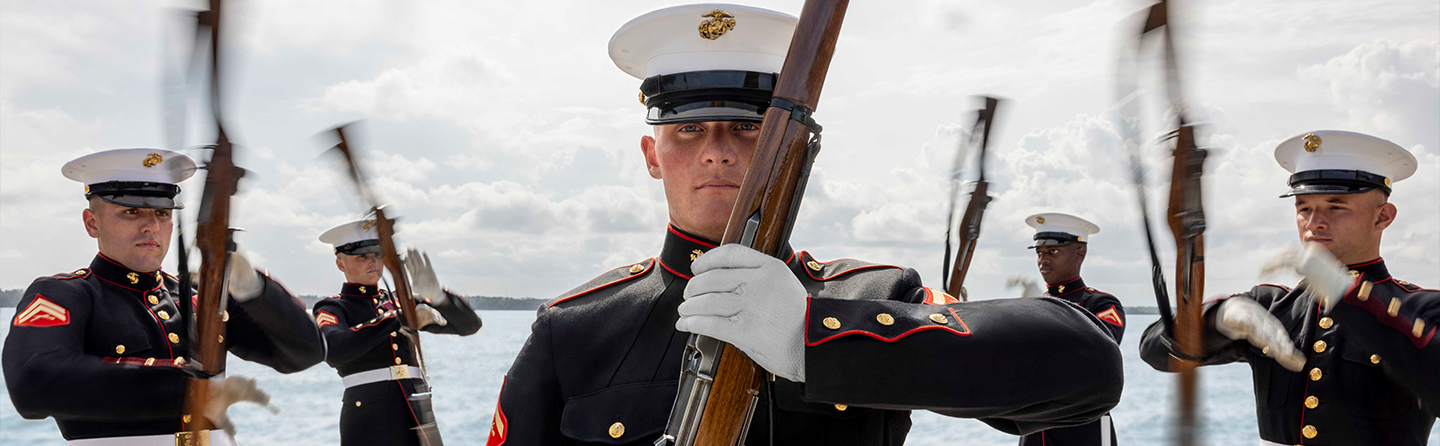
Worn With Purpose
Marine Corps Uniforms
US Marine Corps uniforms reflect a tradition of discipline and commitment
More Than Clothing. It's A Brotherhood Earned.
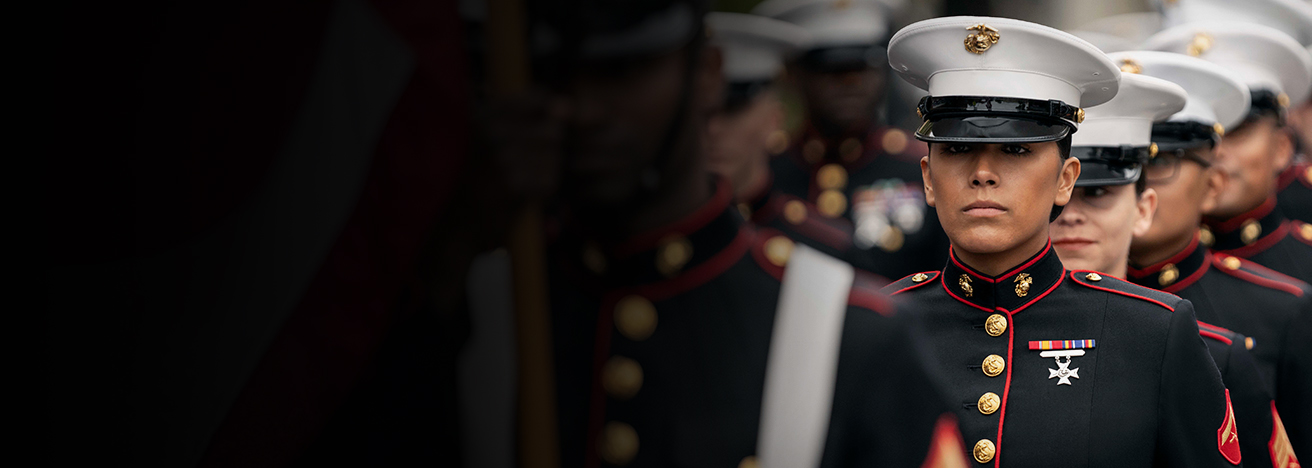
Wearing the Marine Corps uniform is not just a symbol of service—it’s proof of belonging to one of the most respected fighting forces in the world. It represents every challenge overcome, every standard met, and every Marine standing alongside you. This is not given. It is earned—through discipline, grit, and the unbreakable bond forged in training and combat. To wear it is to live up to a legacy shared by those who have answered the call.


Woodland
Mastering the Shadows
Woodland MARPAT conceals in dense environments
Designed for forested regions, the Woodland MARPAT uniform is engineered for stealth and survival. Its pixelated pattern blends seamlessly into complex terrain.
Desert
Concealment in Arid Regions
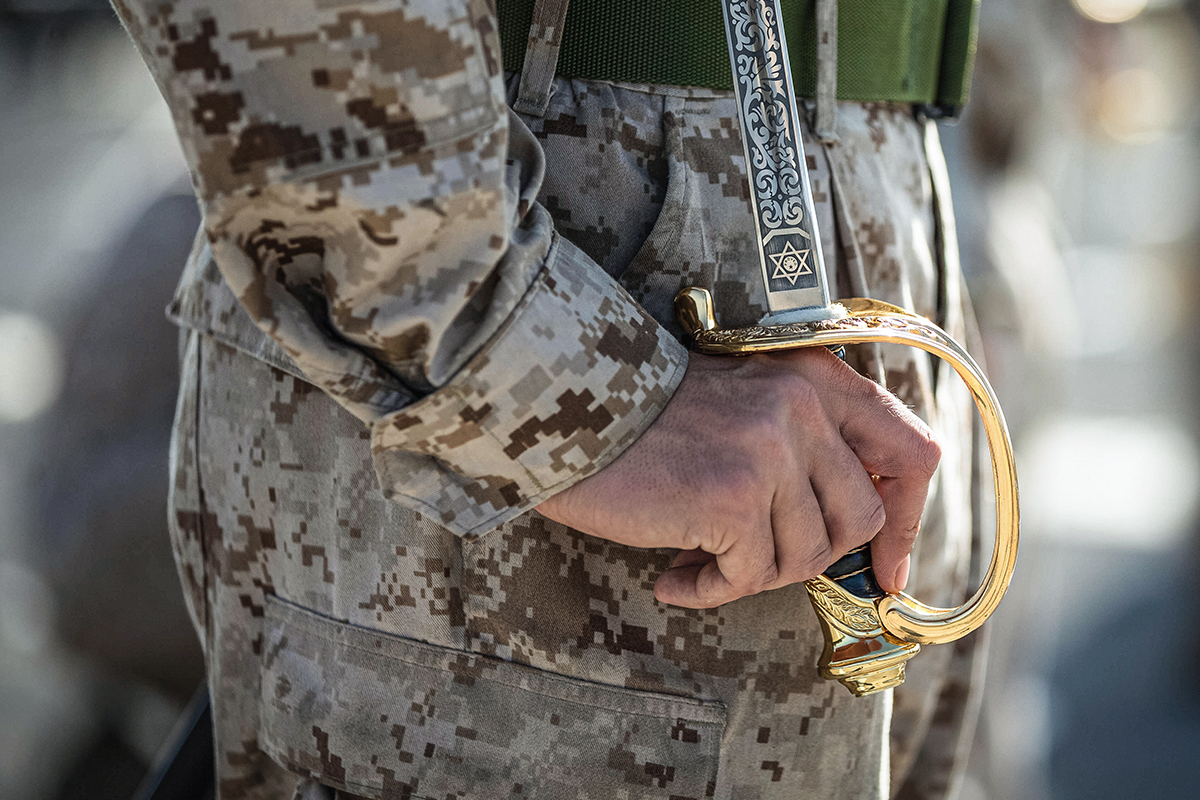
Desert MARPAT gives an advantage where exposure is high
Built for extreme heat and open areas, Desert MARPAT's tan and brown digital camouflage disrupts outlines in dry, dusty environments.
Winter
Dominance in Snowy Terrain
Winter MARPAT for cold weather readiness
When operations take place in snow-covered landscapes, Winter MARPAT's white and gray digital pattern breaks up outlines against snowfields, bare trees, and alpine backdrops.
Significance of the Eagle, Globe, and Anchor
The Eagle, Globe, and Anchor, known as the EGA, is more than an emblem. The moment this iconic symbol is presented to an individual, it marks the transition from being a civilian to becoming a Marine.

Every Marine knows the Eagle, Globe, and Anchor—not just as a symbol worn on the uniform, but as a reflection of what it means to be a United States Marine. Each element of the emblem holds deep meaning, passed down through generations of Marines:
- The Eagle represents the proud nation we defend. With wings outstretched, it stands for the commitment of every Marine to protect and serve the United States—on any front, at any time.
- The Globe signifies our global presence. It reflects the Marine Corps’ readiness to respond anywhere in the world, a reminder that Marines are never limited by borders.
- The Anchor honors our naval traditions. As part of the Department of the Navy, the anchor symbolizes our ability to project power from the sea and operate with unmatched flexibility across all domains.
Together, the Eagle, Globe, and Anchor tell the story of who we are, where we fight, and why we serve. Every Marine earns the right to wear it—and strives to live up to its significance every day.
A Uniform that Commands Respect
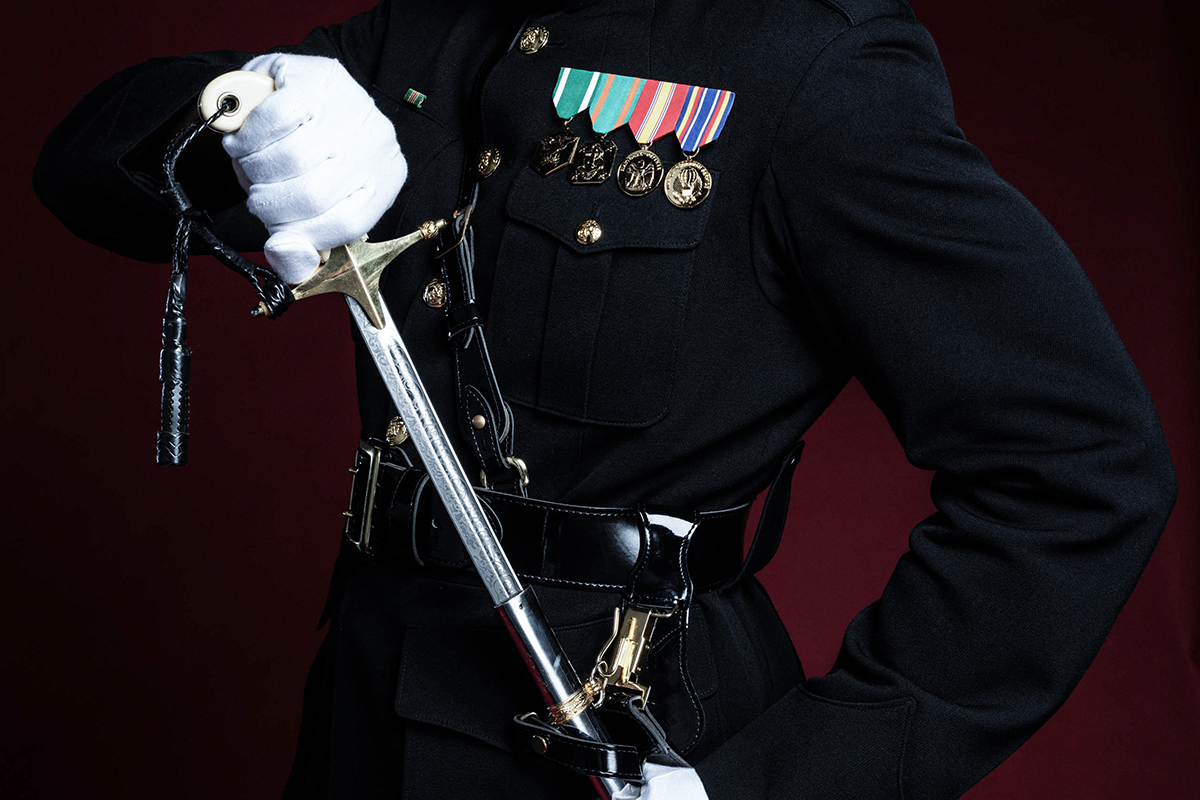
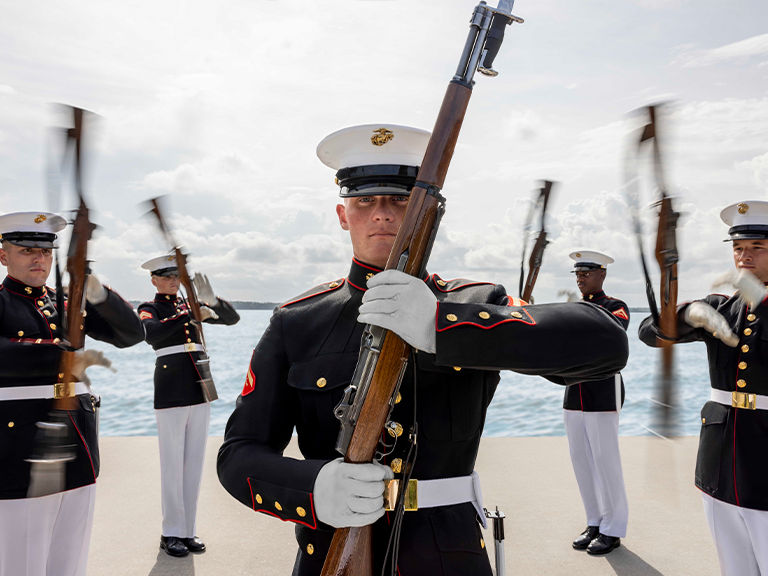
The Marine Corps Dress Blue uniform is one of the most iconic military uniforms in the world. Its origins trace back to the 1800s, and every detail—from the high collar to the Eagle, Globe, and Anchor—reflects the Marines’ commitment to excellence and service.
Service stripes, worn on the sleeve of the Dress Blue uniform, represent four years of honorable service for each stripe earned. These stripes are a visible mark of time, dedication, and the enduring commitment to the Corps.
Wearing the Dress Blues is not just about tradition—it’s about transformation. It marks the moment you become part of something greater than yourself. Few earn the right to wear the uniform and represent what it means.
Many Uniforms, One Mission
Each Marine’s uniform reflects rank and the honors earned through every step of their journey.

From the moment you earn the title, your uniform begins reflecting your journey as a Marine.
Enlisted Marines and Officers wear distinct insignia, accoutrements, and variations of the uniform that signify leadership, experience, and earned respect. From utility uniforms worn in training and combat, to the revered Dress Blues for formal occasions, each piece carries meaning, history, and pride.
Rank brings new symbols, new expectations, and greater trust. Whether you wear chevrons or bars, serve in garrison or on deployment, the distinguishing marks on your uniform speaks for you before you ever say a word.
Every Marine earns their uniform. Know it and respect it.

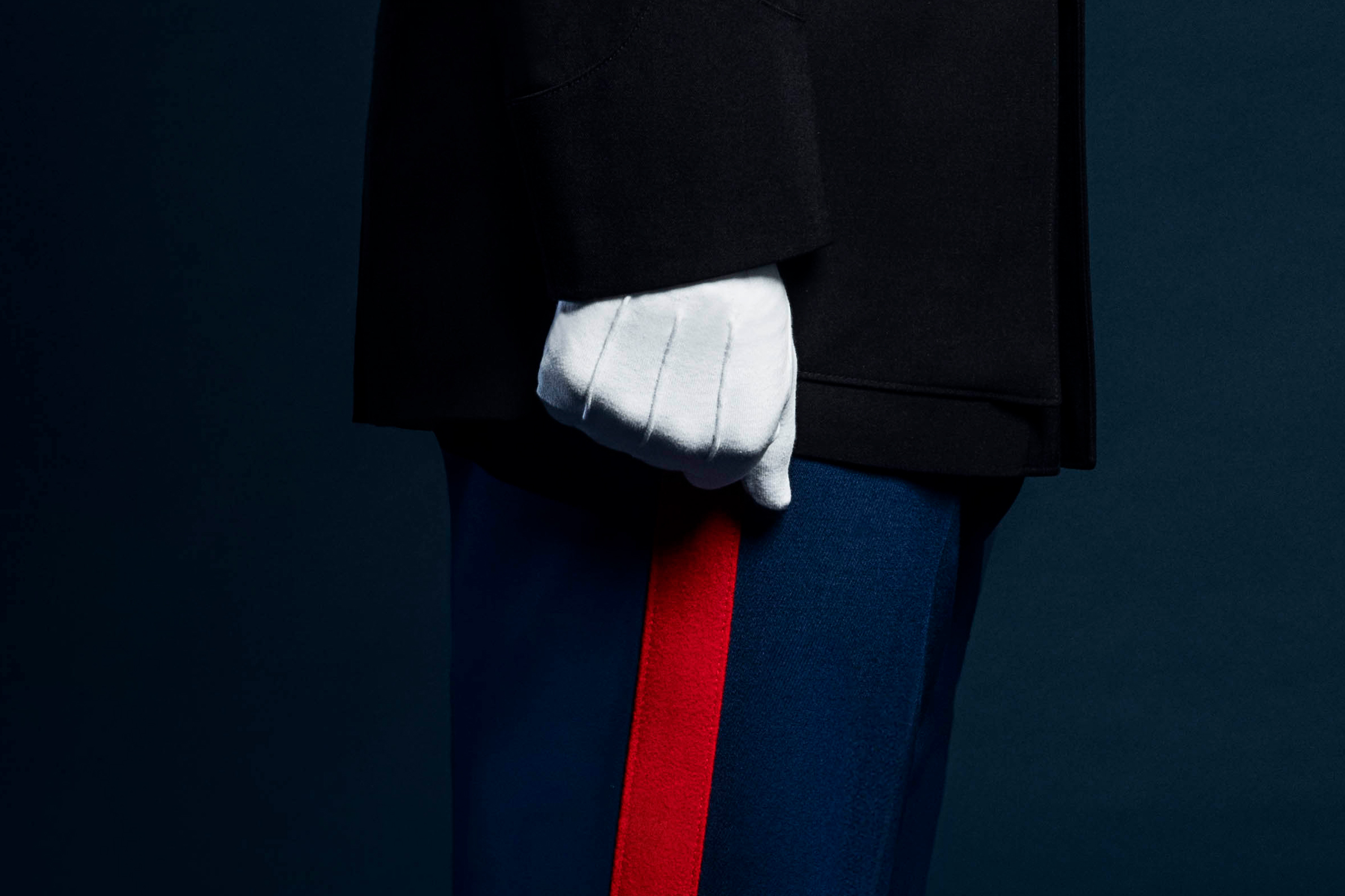
A Service Uniform With Distinction
The Marine Corps Service Uniform represents professionalism, discipline, and daily commitment to the Corps.

The Service Uniform is a symbol of day-to-day excellence in the United States Marine Corps. Worn for official duties, ceremonies, and public appearances outside of combat environments, it reflects the sharp discipline and professional standards expected of every Marine.
Distinct from the iconic Blue Dress Uniform, the Service Uniform features a green coat or khaki shirt with green trousers or skirt, depending on the season and setting. It’s less formal but no less significant—designed to represent the Marine Corps in offices, communities, and anywhere duty calls beyond the battlefield.
The Service Uniform communicates more than rank or role—it signals respect for the mission, attention to detail, and unwavering commitment to the standards that define a Marine. It’s not just what you wear; it’s how you wear it. For those who earn the title Marine, the Service Uniform is worn with pride and purpose—every day.